Alpha… and Omega?
Leica Q3 43 — towards an essential definition of the photographic tool
We tend to address camera propositions in terms of performance: resolution, dynamic range, sharpness, frame rate.
Yet for a photographer, the question lies elsewhere. It lies in the actual perception.
I am a photographer based in Paris, working at the crossroads of portraiture, fine art, street, and landscape.
Over the years - through Zeiss, Sigma, Sony, Canon, Nikon, Fujifilm, Olympus, Leica - I have come to a simple conviction: a tool is not defined merely by what it can do, but by the way it commits the eye.
I make no claim to understand optical formulas better than anyone else, nor to possess any particular technical authority over photographic tools. And yet, I cannot deny the experience, the sensitivity that has slowly formed through practice - through looking, and looking again. It is precisely there that something essential revealed itself to me, during my time with the Leica Q3 43. Follow me...
What is a camera, first of all?
More precisely: what is a lens?
If the body is the sensitive surface - the canvas - then the lens is the brush. But unlike painting, this brush does not simply translate a gesture: it determines the very conditions of seeing.
The history of photography is, in this sense, a decisive shift: from the manual construction of the image to its emergence through light itself.
And yet one question remains untouched: how does one render a visual experience?
Here, an essential notion appears: focal length.
For centuries, painters explored vision through visual frames—from naive imbalance, to fidelity towards human perspective, to deliberate rupture. Photographic optics, by contrast, have spent the past century engineering systems capable of translating such experiences through optical means.
Thus emerged prime lenses, then zooms, spanning from the widest angles to the longest focal lengths.
But unlike painting, where the tool remains open, indeterminate, engineers have had to contend with precise constraints: the sensitivity of surfaces - film, then image sensors - shutter speed, aperture.
At this point, the analogy with painting collapses. For a simple reason: the day the photographer’s eye came into being, when the medium reached a certain maturity, photography and its tools asserted themselves as something irreducibly singular. The consequences were not only artistic, but industrial: cinema was born, and with it a collective way of seeing - of imagining the world through a frame.
Within this realm, something more elusive gradually imposed itself: a certain distance from the world, almost a photographic pre-condition. Before framing, before releasing the shutter, the photographer already perceives the final image through a given focal length. It becomes a language, an instinct, a fundamental layer of expression.
This zone of perceptual accuracy lies somewhere between peripheral and focused vision - between 28–35 mm and 50–75 mm: a fragile equilibrium between immersion and distance, between context and subject.
From this perspective, Leica’s choice of 43 mm is anything but incidental. It inhabits precisely this threshold, while also corresponding to the diagonal of the 36×24 sensor - a structural echo of human vision.
To this must be added another decisive element: the APO Summicron optical formula. A language of remarkable clarity, where chromatic aberrations are reduced to a minimum, and where sharpness and defocus areas create a rare balance - something Leica has already demonstrated across its APO 35, 50, 75 and 90 mm f/2 lenses.
I do not pretend to reveal anything new here - these elements are well known. But their conjunction, reinforced by the proximity of the optical block to the image sensor - a decisive advantage over interchangeable systems - is precisely what allows the Q3 43 to emerge as one of the most coherent syntheses to date.
Let's engage with the images.
First, those straight out of the camera, in JPEG - sometimes with a slightly stronger contrast. What might appear, to a purist, as a form of sacrilege, reveals here something far more essential: the image already stands by itself !


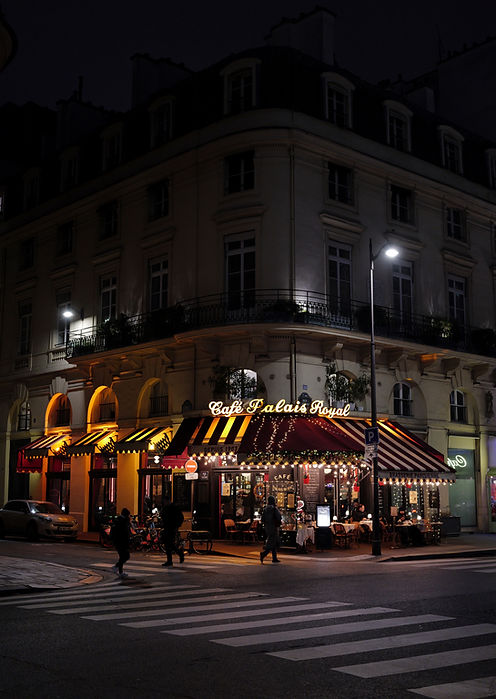


2. ISO 12500, no noise reduction
Quai de Seine, in the middle of the night

3. Should we be talking about resolution?


4. Or perhaps Macro mode? Directly from the camera, again...


Talking about resolution or sharpness in 2026 - especially regarding the legendary work of Leica - would seem almost vulgar to me.
In return, by moving on to the analysis of RAW shots, I suggest we address what escapes the untrained eye: the quality of light transmission specific to the APO Summicron formula, and its effects on the sensor in demanding situations.


Such a banal image, isn't it?
This is a rather striking sunset, but without excessive saturation or forced effects, with a discreet highlighting of small yellow flowers on a cover of a green grass that is actually very saturated, several layers in the mid-distance, then a sky with fine gradations.
Simply put, today our perception is biased by over-processed images, which is why reality seems almost bland.
The approach here is based upon a classic principle: expose for the highlights, then adjust the shadows - in order to get closer to the “truth” of the scene rather than fabricating it.
Unlike a pictural or a HDR approach, the aim here is to document, not to transform.
However, many photographic systems de facto impose heavy corrections (deep shadows, highly saturated colors, high sharpness, local processing, masks) to artificially recreate impact after shooting, otherwise one cannot do justice to the scene itself.
Here, on the contrary, the richness of the information contained in the sensor's colour channels allows for a full, effortless reproduction. And even more so: when I revealed the dark area covering the grass, not only did I observe no artefacts or noise, but I had to reduce the saturation on the green channel, that's how much information the RAW was containing.
This is the benefit of having APO lenses with very high light transmission working in conjunction with a sensitive sensor: the more uniform and abundant the quality of the light arriving at the sensor, the higher the saturation per colour channel - and the less it is necessary to artificially saturate the colours.

In the same vein, I can attest that this is the most natural color range I have ever obtained, across all photographic instruments - while maintaining high color saturation, despite the late winter period in Gascony.


Thus, as I know the Gascon landscapes quite well, and having used several high dynamic range cameras as well as a large number of very high-performance lenses, I immediately confirmed one of the secrets of this Leica tool: the excellent calibration of a sensor sensitive to low amounts of light, combined with one of the best APO Summicron formulas to date.


If we were to make an analogy, this is not a sophisticated dish in a three starred restaurant - where we benefit from an already accomplished interpretation, shaped by the chef's know-how, and which can give the illusion of a personal taste, simply because we knew where to dine - but a material of a rare quality: like the finest foie gras from Gascony, or authentic caviar from the Danube delta.
Because knowing how to appreciate a beautifully prepared dish is one thing; knowing how to work with such high-quality elements is another.
The 43 is precisely that: a material of rare finesse, with extremely high potential, which requires a minimum of historical and technical culture to fully unleash its power - rather than naively consuming it as an expensive object, then believing oneself to be an author through pre-formatted renderings, whether simulations or presets sold online.
Leica engineers do not seek immediate seduction - they have highly exigent with themselves, and so they are with us.
The 43 requires culture, technical understanding, restraint, and a true photographic reading.
Conversely, much of contemporary production - simulations, integrated renderings, presets - offers images that are already "resolved," already stylised, sometimes brilliant, but closed off artistically. They quickly give the feeling of producing, more rarely that of understanding.
Here, it's the opposite: the file is dense, open, demanding. It doesn't flatter you — it engages you.
As for other options on the market, I hear that Hasselblad is pursuing a serious approach to colour and image reproduction. It's a path I respect. But I'm only speaking here about my own experience.
Let's continue.
What about the weather sealing of the camera body - but especially about clarity and saturation in diffuse light, under light rain?
The images shown here are RAW files processed in Capture One Pro, using my own recipe. Take the time to look at them and form your own opinion.


As for the potential of this tool to serve expressive photography, here are two examples of visual exercises.
Both are based on the same color processing method; their similarity stems mainly from the impression of spatialization provided by this 43mm focal length with an aperture of f/2, where several subjects are superposed in layers behind a main subject.
This means that when discussing the ability of an APO Summicron to create true spatialization of the subject, this property is not limited to a single plane: it extends to the entire scene. In this respect, it rivals - and to my eyes, surpasses - the best references, such as the Zeiss Planar T*.
It is, once again, a material of rare finesse.


But then, what would a Leica review be without any proof of portraiture?
For this discipline, as for studio photography, it will be necessary to address this separately, perhaps in relation to other lenses. For the time, the main subject here remains the very identity of this instrument, and the proposition it embodies, now fully legible.
No one should doubt its ability to excel at portraiture. It's not a revelation - simply a given: it's magnificent.
But patience please, my next analysis is on the way...
In conclusion, I would say that while the M series remains the dream of every committed photographer, living somewhere in the shadow of figures such as Henri Cartier-Bresson, Robert Capa, Elliott Erwitt, Irving Penn, Garry Winogrand, Josef Koudelka, Saul Leiter — among others —, the Leica Q3 43 gives me, for its part, the feeling of being the quintessence of one hundred years of Leica research, brought together in a single proposition, through a single focal length.
Ultimately, wouldn't the 43 be the quintessential modern photographic tool?
It's an educational tool for the beginner, a challenge for the intermediate photographer, and an expressive extension for the mature photographer.
Perhaps we're talking about something even rarer here: not just another excellent tool, but the only true synthesis of an evolution - from the Lumière Brothers to nowadays propositions.
The Alpha and The Omega of photographic tools.

